




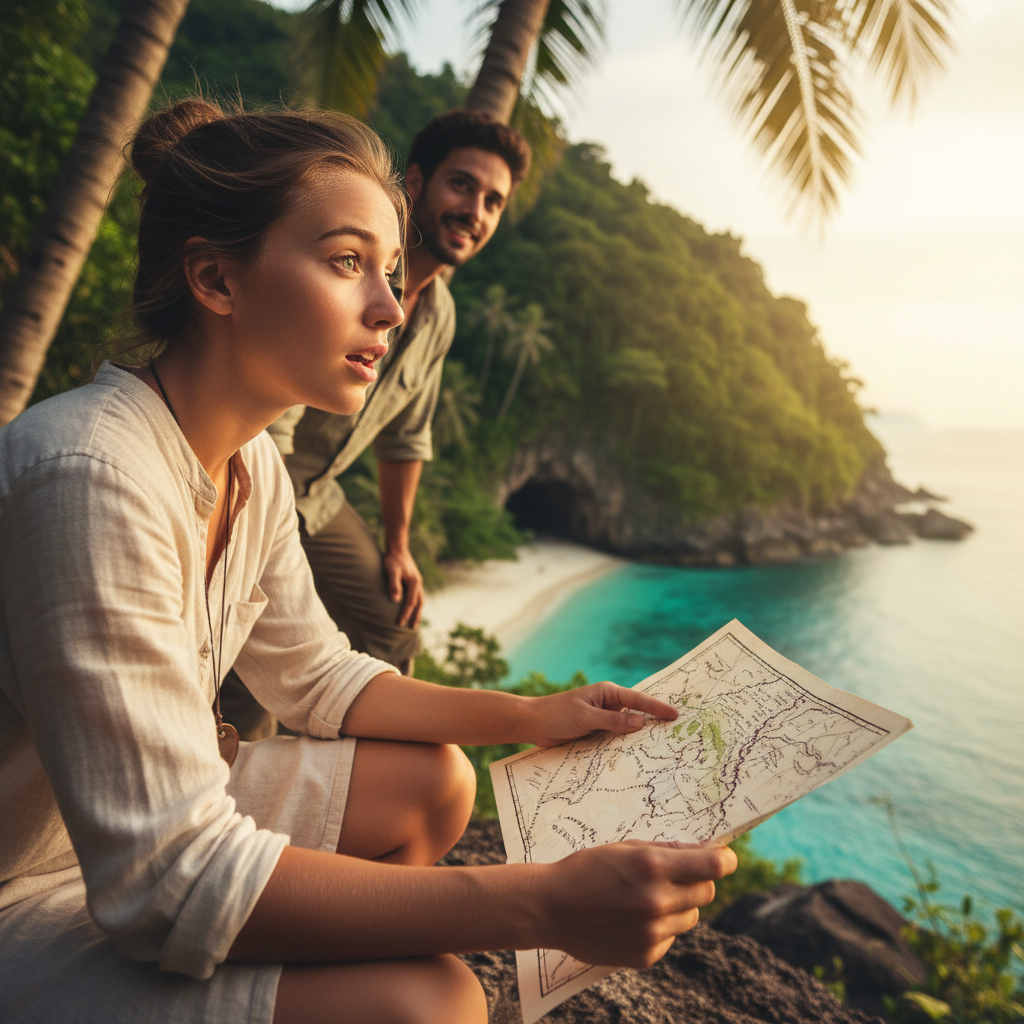
You are standing on the beach of Phuket or flipping through dozens of tabs in your browser, trying to choose an excursion to the islands. The advertisement promises heavenly beaches, crystal waters and unforgettable experiences. But an inner voice whispers: what if, instead of a secluded paradise, a crowded boat awaits you, an hour-long queue for a photo at the cliff and a formulaic route that will rattle off hundreds of similar tourists in a day? The paradox is that the greater the choice, the more difficult it is to discern the real quality and uniqueness of the program behind the glossy pictures. The risk of spending a lot of money and a whole day of vacation on disappointment is the main pain of a thoughtful traveler.
To make an informed choice, it is not enough to compare prices and island listings. You need to understand the very nature of this market. Excursions to Phuket Islands have come a long way of evolution - from casual trips on fishing boats to a complex industry with clear segmentation. Knowing this history is your best filter against marketing noise. She'll explain why deals with the same name can cost triple the price and help you find a tour that perfectly matches your expectations.
Origins: from fishing schooners to the first tourist routes
In the late 1970s and early 1980s, when Phuket was just opening up to the world, there were no tour operators or schedules. The first guides were local fishermen and residents of coastal villages. On their wooden longtail boats, adapted for the sea and transporting goods, they could, for a small fee, take a few brave tourists to the nearest uninhabited islands - for example, Coral or Bamboo. These were not excursions, but rather a transport service with an element of adventure.
The first “hits” were also formed - trends whose natural beauty spoke for itself. Phang Nga Bay with its karst rocks, including the future James Bond Island, and the Phi Phi archipelago with its incredible turquoise lagoon. The routes were simple: landing on the beach, snorkeling at the reef, lunch from the fresh catch. There were no standards of safety, comfort or explanation - just a pure, unmediated experience of the sea. This period laid the basic framework for all future tours to the islands, defining geography, which still underlies most programs today.
The era of mass tourism and the standardization of “classic” programs
With the boom in tourism in the 1990s and 2000s, everything changed. Demand began to amount to thousands of people per day. The industry responded with the logic of the conveyor belt: maximum load, minimum cost, predictable schedule. Longtails have been replaced by spacious speedboats and steel motor boats that can carry 50-100 people. Cult “classic” routes emerged that still roam the sites: “Phi Phi in one day”, “Phang Nga Bay + James Bond”, “Similan Islands”.
Quality and experience were sacrificed for efficiency. The program became a tight schedule: 20 minutes for photos by the cliff, 45 minutes on the beach, a buffet lunch in the crowded island dining room. Significant places during peak hours resembled an anthill. Comfort on board was minimal; the guides worked from a memorized text. Despite this, the model turned out to be commercially very successful. For many tourists, this was the only way to see the famous beauty, and the fact of visiting outweighed the shortcomings of the service. Market best excursions Phuket in the mass consciousness has become synonymous with precisely these promoted but overloaded areas.
Standardization created a recognizable product for millions, but at the same time it gave birth to “conveyor tourism”, where experiences became a replicable product rather than an individual adventure.
Template crisis and request for uniqueness
Naturally, the next phase was disappointment. Experienced travelers, and then mass tourists who visited the “conveyor belt”, began to look for an alternative. Social networks and travel blogs have shown that it is possible differently. There is a demand not for a “tick” on an attraction, but for genuine emotions: solitude, silence, the opportunity to take unique shots without crowds, immersion in nature.
This request gave impetus to market stratification. The first operators appeared who deliberately avoided the crowd, offering an early start, visiting remote bays of popular islands, or focusing on little-visited locations in the same Phang Nga Bay. Tourists began to appreciate not the number of stops in the program, but their quality and atmosphere. The template crisis became a bifurcation point, from which the industry took the path of diversification.
Market differentiation: segmentation by vessel type and experience
The response to the new demand was a clear segmentation by type of vessel, which directly determined the nature of the trip. The market is divided into several parallel worlds:
| Vessel type/program | Target audience and experience | What does it offer instead of a “conveyor” |
|---|---|---|
| Speedboats | Dynamic, eventful route. For those who want to get the most done in a day. | Speed (more islands), but in small groups (20-30 people), more flexible schedule. |
| Sailing yachts and catamarans | Connoisseurs of romance, leisurely relaxation, photo sessions. Families and companies. | Atmosphere, comfort, space. Often - sunset dinner cruises, focusing on relaxation rather than racing. |
| Traditional Longtail Boats | Seekers of authenticity, support of local business. Small companies. | Personalized private route, the ability to enter narrow bays, direct contact with the captain. |
| Luxury cruise ships and mega-yachts | Premium segment requiring maximum comfort, service and privacy. | High class of service, gastronomy, spacious decks, often night tours or programs for several days. |
Choosing a vessel is no longer just a choice of transport. It has become the choice of holiday format, pace and travel philosophy. This is a key shift in Phuket excursion stories.
Modern landscape: from budget charter to premium liveaboard
Today, the market is a complex ecosystem catering to needs ranging from the humble to the exclusive. At one extreme there are budget group tours on large boats, but they, under the pressure of competition, are improving basic comfort (air conditioning in the cabins, better life jackets). On the other - real premium safari: Full-day private charters with a naturalist guide, chef-driven catering, and an itinerary tailored to your interests—whether diving a specific reef, bird watching, or visiting an island to volunteer to protect turtles.
The dominant trends are personalization, sustainable tourism (elimination of single-use plastic, anchoring on special buoys so as not to harm corals) and hybrid programs. The latter combine activity (kayaking, trekking), gastronomy (Thai cooking classes on the island) and a cultural component (visiting a fishing village, rather than just passing by). Modern excursions to Phuket islands They sell not movement between points, but a holistic, thematic experience.
Technological breakthrough and new standards of comfort
Technology has also spurred the evolution. Online booking with real reviews and ratings has increased transparency, shifting power from street agents to the tourist himself. The ships themselves now have hydrodynamic stabilization systems that make sailing at speed on the open sea much more comfortable. GPS became widespread and improved navigation and safety.
The service on board has reached a new level: these include professional Russian-speaking guides (not just accompanying people, but local history enthusiasts), high-quality snorkeling equipment (full-face masks, wetsuits), and the presence of freshwater showers on large ships. Technologies have made it possible to make even a mass product safer and predictably comfortable, and in the premium segment to create an almost seamless high-class service.
The future of island excursions: where the industry is heading
Further development will follow the path of hyper-personalization and deepening of niches. Requests for narrowly themed tours are already being generated: for example, photo safaris for professionals with a photographer guide during the “golden hours,” or excursions with an emphasis on marine biology. The popularity of micro-destinations—tiny island archipelagos where large groups do not go—is predicted to grow in popularity.
Environmental regulation will become stricter: quotas are possible for visiting the most fragile locations (as on the Similan Islands), a complete transition to electric or hybrid engines for close routes. The experience will increasingly go beyond the inspection: interactive learning, volunteering, wellness programs on private islands. The line between excursion, cruise and retreat will be completely erased.
Criteria for choosing the best excursion in a modern context
By understanding this evolution, you can put aside the marketing and ask the right questions when choosing a tour. History of excursions Phuket gives us evergreen evaluation criteria:
- Vessel type and size. What is your priority: speed (boat), atmosphere (sailboat), authenticity (longtail) or maximum comfort (premium yacht)? The number of people on board directly affects your freedom and experience.
- Route details and timing. Avoid vague language. How much exactly time allotted on each island? Is it 30 minutes or 2 hours? Are you visiting the main crowded beach or a remote cove?
- Service details as an indicator of class. Lunch is included - but is it a boxed lunch, buffet or served on board? Is snorkeling equipment included in the price? Is there fresh water, fruit, showers on board?
- Ethical and sustainable. Does the tour operator mention measures to protect the environment (no plastic, rules of behavior around corals)? This is no longer just “green” PR, but a sign of a responsible approach.
- Reviews and reputation. Look for not only enthusiastic responses, but also comments about real details: punctuality, organization, the guide’s response to questions, comfort at sea.
The evolution from a fishing boat to a premium safari is the story of how a tourist turned from a passive consumer into a conscious customer, shaping the entire market with his choice. Today is the best excursion to the islands from Phuket - not the one that is advertised loudest, but the one whose parameters (vessel, route, philosophy) precisely coincide with your internal request for adventure. Knowing this story will help you stop choosing blindly and give you the tools to find your perfect trip across the shimmering waters of Andaman.