




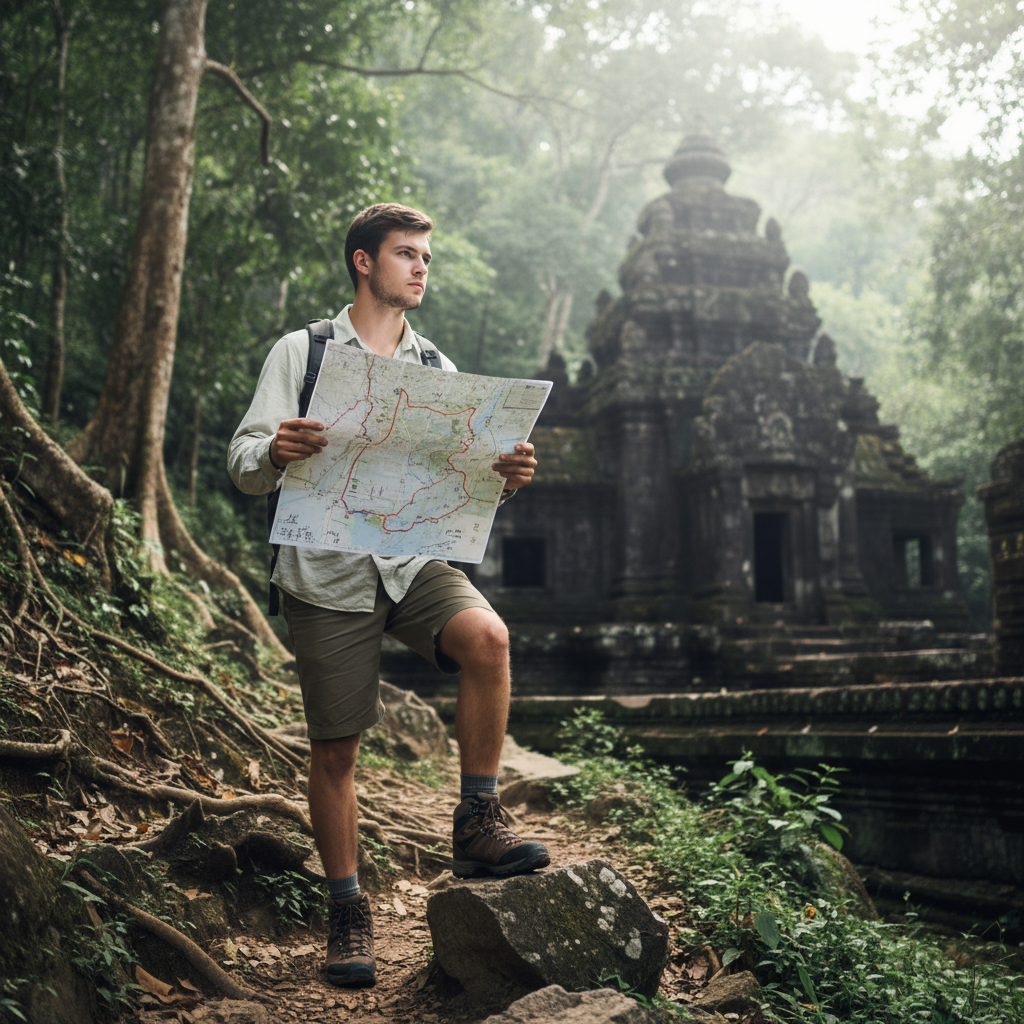
Why planning your own pays off at the airport
You did it. Tickets to Phuket have been purchased, a vacation is on the horizon, and pictures of turquoise water and palm trees are already being drawn in your head. But exactly until the moment you open an application with dozens of offers from travel agencies. Excursions to the islands, shows, transfers, sightseeing tours - everyone promises “all inclusive” and “the best price”. Sound familiar? It’s easy to get lost in this stream of offers and, what’s more offensive, to overpay for something that you can organize yourself for half the cost.
This article is not another “top 10 places” list. This work checklist, which turns the chaos of information about Phuket into an understandable itinerary. You will no longer be a passenger on a guided bus and become the captain of your journey. You will find out how to plan a trip to Phuket on your own, to see everything you planned, not to go broke and not feel like you missed something. We'll break the island down into simple categories, from must-sees to hidden gems, and show you how to combine them into a single itinerary that's just right for you.
Category 1. Basic set: what you must see in Phuket
Before we delve into the wilds, let’s define the “skeleton” of your trip. These are the places that define Phuket and that you definitely don't want to miss. They are scattered around the island, but visiting them will not take a whole day if you plan your route wisely.
Temple complex Wat Chalong
The main Buddhist temple of the island. This is not just a tourist attraction, but an active religious center. Here you will see the famous stupa with a fragment of Buddha's bone, climb to the top tier for a panoramic view and feel the atmosphere of tranquility.
- Practical advice: Visit in the morning (before 10:00) while there are no crowds or scorching sun. Admission is free.
- Dress code: Shoulders and knees must be covered. If you forgot, sarongs are given at the entrance.
Big Buddha
A huge 45-meter statue, visible from most of the island. This is not only an iconic place, but also the best observation deck overlooking the southern coast of Phuket.
- Best time: Sunset. The views of the Andaman Sea at sunset are magical.
- Important: The road to the top is steep and winding. If you are on a scooter, make sure you have sufficient driving experience.
Phuket Old Town
Chinese-Portuguese architecture, colorful facades, cozy cafes and a Sunday market. This is a place where you can take atmospheric photos and try real street food.
- Tip: Come on Sunday evening to the Walking Street Market - this is the main gastronomic event of the island.
- Transport: Tuk-tuks go here from the beach areas (Patong, Karon), but the easiest way to get there is by rented bike.
Promthep Cape
The southernmost point of Phuket and a classic place to watch the sunset. The view of the ocean, lighthouse and palm trees is the “postcard” you are looking for.
- Nuance: There are always a lot of people here. Arrive an hour before sunset to get a good spot and enjoy the moment in peace.
Remember: these four points are your absolute minimum. They give a complete picture of the island: its culture, nature and history. Self-guided excursions in Phuket start with this basic set.
Category 2. Island excursions without crowds: how to get to the best beaches and bays
Phuket is the gateway to archipelago paradise. Phi Phi, James Bond, Similan Islands are names that promise the perfect holiday. But buying a tour from a street agency is not the only and often not the most profitable way to see them. Let's figure out how to organize independent excursions to Phuket without intermediaries.
Rent a Longtail Boat for the day
Ideal for a company of 2-4 people. You hire a traditional wooden boat with a driver for the whole day and decide for yourself where to sail: to the remote beaches of the south (Kata Noi, Nai Harn), to the Coral or He Islands (Racha).
- How to negotiate a price: Go straight to the pier (such as Rawai Pier or Chalong Pier) and bargain with the captains directly. The starting price is usually 2 times higher. The average rental cost per day is 2500-3500 baht.
- Plus: Complete freedom. Want to stop in a deserted bay for snorkeling? Please.
Independent trip to Phi Phi Island
You can buy a ferry ticket at the same pier or through the app (12Go.asia) 1-2 days in advance. It will cost 2-3 times cheaper than an organized tour with transfer from the hotel.
- Lifehack: Arrive at the first ferry of the morning (around 8:00). You'll arrive on Phi Phi Don before the main crowds and have time to enjoy Long Beach in peace.
- What to do: Do not take a tour to Phi Phi Lei (Maya Bay) on the spot - it is expensive. Instead, rent a paddle board or kayak and explore the area on your own.
James Bond Island and Phang Nga Bay
This route is popular because of the rock jutting out of the water. Getting there on your own is more difficult, but possible. Rent a bike and ride to Bang Rong Pier. There you can arrange a tour of the bay with a local boatman. You'll see the same mangroves and limestone cliffs, but without the crowds of tourists from the big buses.
Category 3. Hidden Growth Spots: Unobvious Places That Are Worth Your Time
When the basic set and boat trips are mastered, you want something more authentic. What to see in Phuket other than hiking trails? Here are a few locations that will give you a deeper impression of the island.
Karon Viewpoint observation deck
Also known as the Three Beaches Viewpoint. From here you have a breathtaking view of three bays: Karon, Kata Noi and Kata. This place is much less crowded than Cape Promthep, and the views are no less impressive.
- How to get there: On a bike on the road between Karon and Kata. Admission is free.
Tiger Cave Temple (Wat Tham Sua or Tiger Cave Temple)
Not to be confused with the temple in Krabi. This one is located in the north of Phuket and is famous for its 200-meter Buddha statue and a cave where, according to legend, a tiger lived. The most interesting thing is the climb up 300 steps to the top of the hill. You will be rewarded with incredible views of the northern part of the island and mangrove forests.
- Tip: Take water and wear comfortable shoes. Monkeys on the temple grounds can be intrusive - do not keep food in open bags.
Bang Pae Waterfall
One of the largest waterfalls in Phuket. It is located in Khao Phra Thaeo National Park. During the rainy season (from May to October) it is full of water and forms a natural swimming pool. During the dry season, the water flow is weaker, but the place itself remains very picturesque.
- Login: 200 baht for adults.
- Tip: Combine with a visit to the Gibbon Rehabilitation Centre, which is located nearby. Admission is free, but donations are welcome.
Chillva Market
Unlike the tourist Night Market in Patong, Chilwa Market is a place where the Thais themselves relax. Here you will find unusual street food, handmade designer items and live music. The atmosphere is very relaxed and youthful.
- When to go: Open from Wednesday to Sunday from 16:00 to 23:00.
- Location: Next to Central Phuket shopping center (not to be confused with Central Festival).
Category 4. Transport logistics: how to connect the dots on the map without overpayments
The most common fear of an independent traveler in Phuket is transport. Taxi drivers on the island are notorious for overpricing, and buses do not operate on all routes. But there are proven ways to move around the island without overpaying.
Rent a scooter (bike)
This is the most popular and cheapest way to travel. Rental costs from 200 to 400 baht per day. Gasoline - about 40 baht per liter.
- Risks: You will need an international license (IDP) with category A. Without them, when checked by the police, you will be fined from 500 to 1000 baht. If you get into an accident, your insurance may not cover the costs.
- Tip: Always check your scooter for scratches and take photos before renting. Do not leave your passport as collateral - it is better to leave a copy or a cash deposit.
Taxi via apps (Grab, InDrive, Bolt)
An alternative to street taxi drivers, who often quote prices “from the ceiling.” In the application you see the fixed cost of the trip and do not haggle. It's legal and safe.
- Comparison: InDrive is usually cheaper than Grab, but you can negotiate with the driver. Bolt is the most budget option, but there are fewer cars.
- Example: A trip from Patong to Phuket Town via Grab will cost 400-500 baht, and a street taxi driver will ask for 600-800 baht.
Tuk-tuks and local buses
Tuk-tuks in Phuket are not those colorful motorized carriages like in Bangkok. These are full-fledged pickup trucks with a covered body. They are expensive (from 200 baht for a short trip) but convenient for a group.
- Buses: The only route that runs along the west coast, connecting Patong, Karon, Kathu and Phuket Town. The fare is 30-50 baht. This is the cheapest, but also the slowest method.
| Transport | Cost (per trip/day) | Speed | Flexibility | Risks |
|---|---|---|---|---|
| Scooter (rent) | 200-400 baht/day | High | Maximum | Rights, accidents, fines |
| Grab/InDrive | 300-800 baht | Average | High | Minimum |
| Knock knock | 200-600 baht | Low | Low | Inflated prices |
| Local bus | 30-50 baht | Low | Low | Only along the route |
How to use this checklist: from list to live route
So, you have the full toolkit at your fingertips: a list of must-see spots, boating options, hidden gems and transportation maps. Now the most important thing is to assemble your own unique route from this puzzle. Phuket route should not be a race for the number of points. It should be comfortable and logical.
Here is a simple formula for how to create your plan for 3-5 days:
- Select 3-4 priority goals. Don't try to embrace the immensity. If you are traveling for 5 days, choose 2-3 must-dos from Category 1 and 1-2 from Category 3. Dedicate one day to a boat trip (Category 2).
- Group by geography. Divide the island map into three zones:
- South: Promthep Cape, Big Buddha, Wat Chalong, Kata/Karon beaches.
- Center: Phuket Town, Karon Viewpoint, Chilwa Market.
- North: Tiger Cave Temple, Bang Pe Waterfall, Airport.
- Plan by zone. Visit only one area per day. For example: Morning - Wat Chalong and Big Buddha. Lunch - lunch in a cafe nearby. Evening - sunset at Cape Promthep. This is a logical and relaxed day.
- Leave room for spontaneity. Don't schedule every minute. If you saw a beautiful beach along the way, stop. If you want to try street food in an unfamiliar market, do it. Flexibility is the main advantage of traveling alone.
This checklist is not a rigid instruction, but your personal navigator. It provides structure but leaves room for your own discovery. Phuket check sheet — about getting the greatest enjoyment from what you have chosen, rather than making sure you miss nothing.
Now that you have this plan, you can safely turn off notifications from travel agencies and start packing your suitcase. Your journey begins not with the purchase of a tour, but with the decision to be its author. And believe me, this script will be much more interesting than any template film.