




The era of big buses: where Phuket excursion began
You open a website with excursions in Phuket and see hundreds of offers. Almost all promise the same thing: observation deck, big Buddha, Wat Chalong, Swedish-style lunch, coconut oil factory. You feel that this is not what you need. But how do you distinguish real experience from a standard set of “tick boxes”? To understand this, it’s worth looking into the past and seeing how the market for excursion services on the island was formed.
Twenty years ago, the choice of excursions in Phuket was simple and predictable. Tourists were put into large air-conditioned buses and driven around the island's "golden ring". The route included obligatory points: the Wat Chalong temple, the observation deck at Cape Promthep, the Big Buddha statue and, of course, several shops with pearls, latex and souvenirs. The time for sightseeing was strictly regulated - 20–30 minutes per location, just enough to take a photo and catch the bus.
This model worked as long as tourists were unsophisticated and relished any opportunity to see the island. But gradually the “gallop across Europe” format ceased to satisfy the needs of travelers. The same type of programs, crowds of people at attractions and obsessive shopping caused more and more disappointment. It was then that the search for alternatives began - at first timid, and then more and more confident.
The dawn of island tourism and the first alternatives
By the mid-2000s, Phuket was no longer just a beach destination. Tourists began to get tired of passively lying on sun loungers and wanted activity. The first signs were boat trips to the nearby islands - Phi Phi, James Bond and Similan. Snorkeling and diving quickly gained popularity, and local companies began offering day-long speedboat tours.
At the same time, active land tourism also developed. The first trekking routes appeared in Khao Sok National Park, elephant rides and trips to waterfalls. These programs offered something new - interaction with nature, not just sightseeing. However, here, too, a standard was quickly formed: breakfast at the hotel, boarding a minivan, three stops along the way, lunch at a tourist restaurant and return in the evening.
The main problem with the first alternatives was that they copied the logic of big buses, just on a smaller scale. Tourists were still part of the group, followed a schedule and had no opportunity to deviate from the route. Demand for real individuality remained unsatisfied.
Growth point: how the author’s routes appeared
The turning point came when locals and expats entered the market who knew the island well and wanted to truly show it off. They realized that tourists were tired of “checking out” attractions and were willing to pay for depth and authenticity. So they began to appear non-standard excursions in Phuket.
The first were gastronomic tours. Instead of dining at a tourist restaurant, guests went to markets, street cafes and visiting local families to try authentic Thai food. Then photo expeditions to temples appeared, conducted by professional photographers. They took groups to non-tourist villages, explained the symbolism of architecture and taught them how to take shots that you won’t see on every second person’s Instagram.
A special niche has been occupied by routes dedicated to the history and culture of Phuket. Instead of a standard visit to Wat Chalong, enthusiastic guides began taking tourists around the Old Town with its Sino-Portuguese architecture, talking about the tin rush period and showing houses where descendants of the first miners still live. These programs required time and immersion, but they gave the same feeling deep and memorable experience, for which discerning travelers come.
Author's routes changed the market: they proved that tourists are willing to pay not for the number of locations, but for the quality of the experience and the personal attention of the guide.
State of the Art: Personalization and Hidden Gems
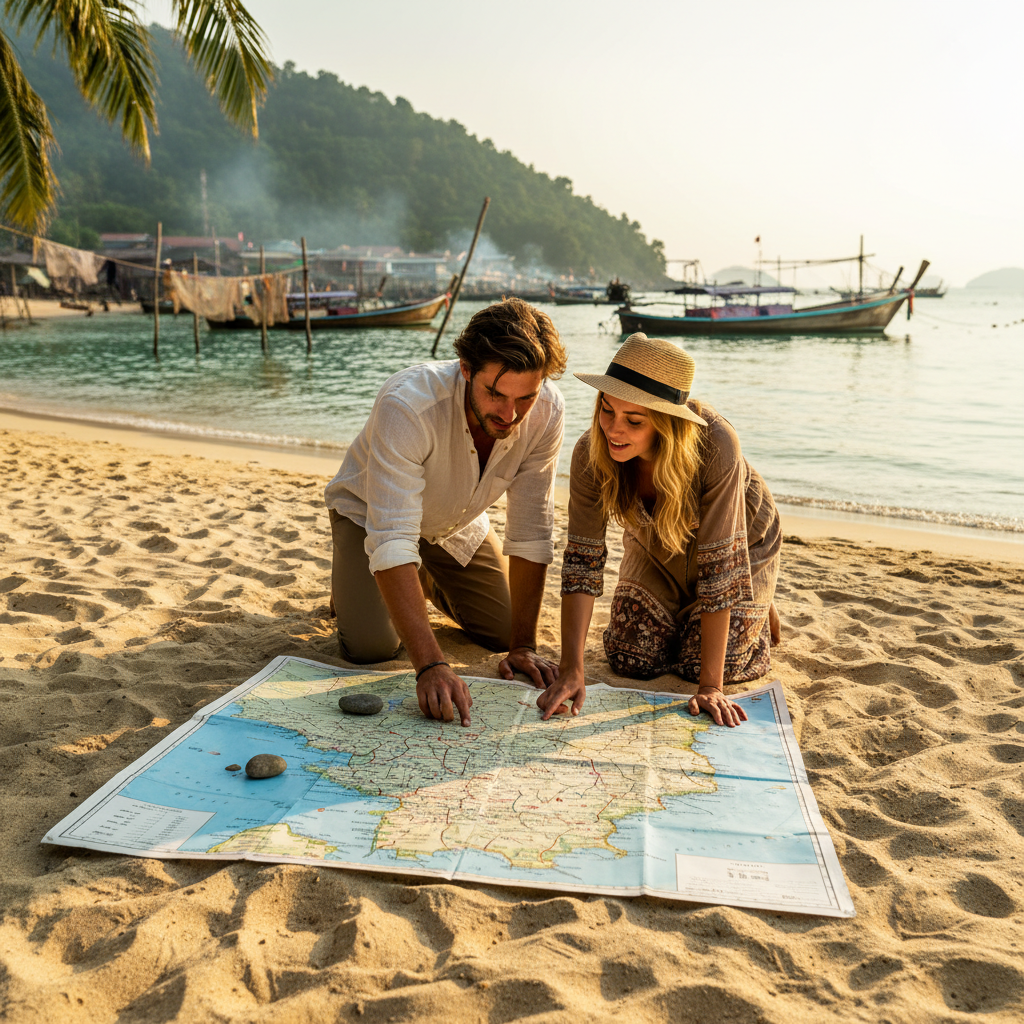
Today, the excursion market in Phuket offers an incredible variety of formats. The main trend of recent years is individual excursions to Phuket, which completely adapt to the interests of the traveler. You are no longer tied to the group's schedule and can change the route as the day progresses.
Technology has played a key role in this transition. Through messengers and specialized applications, tourists can directly contact guides, discuss the program, adjust it and even choose transport. Private boats and sunset charters have become more accessible - now you don’t need to book a whole boat, you can join a micro group of 4-6 people.
Particularly popular are routes that lead away from the beaten path. Instead of Phi Phi Island with crowds of tourists - Racha Island or Koh Yao Yai. Instead of the Big Buddha, there are little-known temples in the depths of the island, where there are no souvenir shops and you can calmly chat with the monks. Instead of a buffet - a picnic on a deserted beach with seafood bought in the morning at the fish market.
The modern traveler is looking not just for an excursion, but personal historywhich he can take with him. And the market has learned to create this story.
Where the market is heading: excursions of the future in Phuket
Evolution does not stop, and now you can notice several directions that will determine the development of the Phuket excursion market in the coming years.
Environmental responsibility. Eco-tours are becoming not just a buzzword, but a conscious choice. Tourists want to know that their trip is environmentally friendly: electric cars or low-emission boats are used, the use of plastic is minimized, and part of the cost of the tour goes towards restoring coral reefs or cleaning beaches.
Immersion and cultural immersion. Instead of a superficial inspection, there is a full-fledged interaction. Tourists learn to cook Thai dishes in classes with local chefs, master the basics of Thai boxing, participate in ceremonies at temples and live with families in remote villages. This is no longer an excursion in the classical sense, but cultural exchange.
Micro-groups and inland focus. Large buses and even minivans for 10–15 people give way to jeeps and SUVs, which can drive into hard-to-reach corners of the island. The hinterlands of Phuket - rubber plantations, old mining towns, mountain villages - are becoming new centers of attraction. It was there, far from the noise of the beach, that the real life of the island was preserved.
The history of the development of the Phuket excursion market is the history of the transition from quantity to quality. From standard programs for everyone to personalized routes for everyone. Today when you decide where to go in Phuket, you have a choice: follow the path of millions of tourists or discover the island as the locals know it. The second option requires more time for searching and planning, but it is the one that gives you the very impressions for which it is worth going on a trip.