




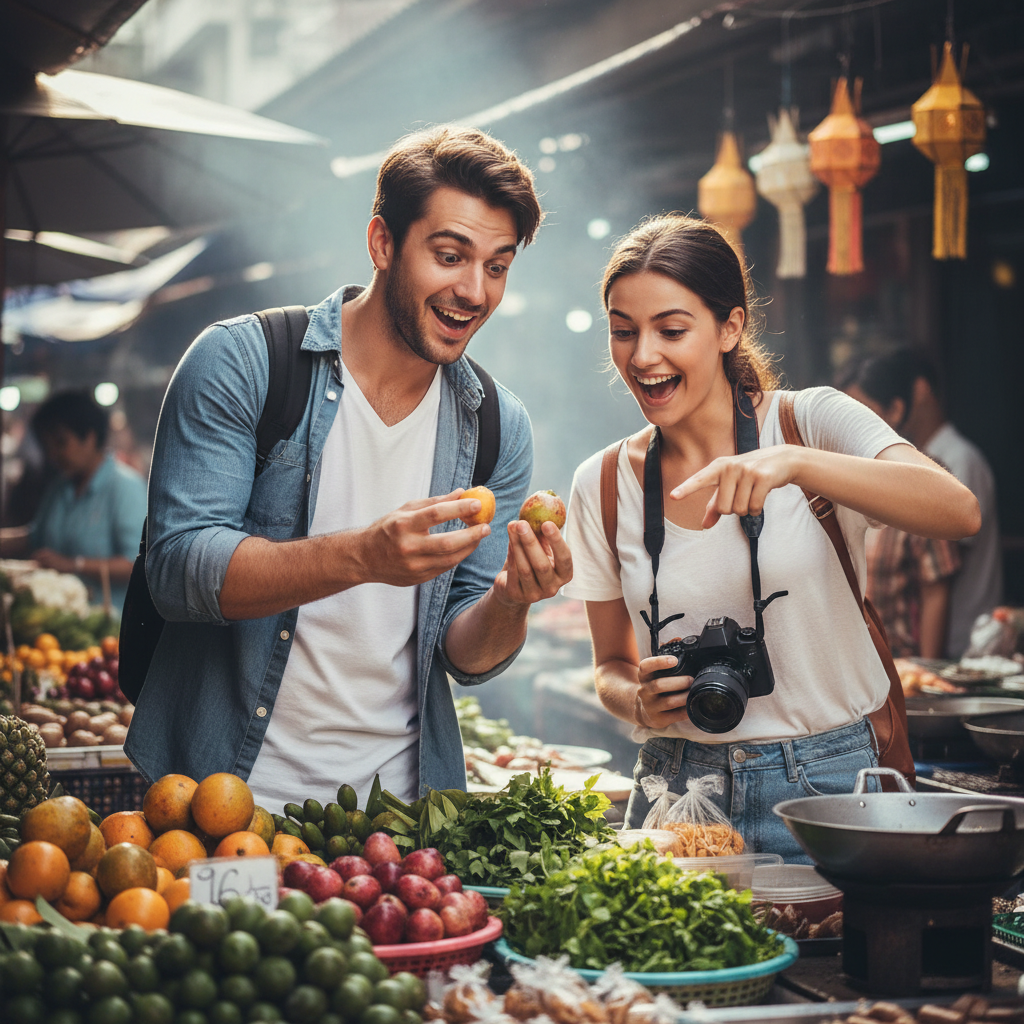
According to traveler surveys, more than 70% of tourists coming to Phuket for the second time deliberately avoid standard group tours. They are looking for a different experience - an opportunity not just to see, but to feel the country. This is exactly the problem that authentic Thai excursions in Phuket solve. This is not about a bus, a microphone and a quick sightseeing. It's about immersing yourself in culture, personal stories and moments that stay with you long after you return home. This guide is your step-by-step plan for finding, selecting and creating the kind of trip that will turn your vacation into a real discovery.
Purpose: Why do you need a Thai excursion, and not a standard tour?
The first step is to shift your focus. The goal is not to “check in” at the Big Buddha or the observation deck. The true purpose of authentic excursions around Phuket - gain cultural experience. The difference is fundamental: a standard tour answers the question “What to see?”, and a Thai excursion answers the questions “How do they live here?”, “What do they believe?”, “What do they like to eat and why?” You are not buying a transfer and tickets, but emotions, context and a personal story from a guide who is ready to share not only facts, but also part of his world.
Preparation: Setting up the perception filter before searching
Before opening websites, prepare yourself internally. This will make the search conscious and effective.
- Learn the basic context. Spend an hour reading about the history of Thailand, the basics of Buddhism, respect for the royal family. Understanding these basics will radically change your perception of temples, rituals and local behavior.
- Identify your interest. What lights you up? Thai cuisine, history, textiles and crafts, nature and rural life? A clear request will help narrow down your options.
- Set expectations for yourself. Write down what you definitely want to avoid (crowds, shopping at imposed points) and what you hope to get (the opportunity to communicate with locals, try to do something with your own hands).
Step 1. We are looking not for a guide, but for a guide to culture
The key element is the guide's personality. You do not need an announcer, but a guide, often a local resident who is in love with his region.
- Where to look: Specialized platforms for unique excursions (like Withlocals or ToursByLocals), Instagram accounts with hashtags #phuketlocalguide, recommendations in thematic travel blogs about Thailand, and not on mass tour aggregators.
- What to look for in the description: Language. The phrases “I’ll show you my beloved...”, “let’s go to my friend...”, “I’ll tell the story of our family” are a good sign. Pay attention to the details in the reviews: “the guide answered all our non-standard questions,” “we felt like we were visiting a friend.”
Step 2. Deciphering the program: hidden meanings behind the list of dots
The program is a map that you need to be able to read. Same point names can hide different experiences.
Signs of depth:
- “Market for locals + cooking class with a chef guide” (involvement, not observation).
- “Visit to a family workshop of rubber plantations” (unique access, support for small businesses).
- “A leisurely walk through the old quarters with stories of the past” (emphasis on narrative, not mileage).
Signs of pattern: A long list of “all the must-see places in one day”, obligatory stops at jewelry centers or leather stores, no description of what what exactly you will do at each point.
Step 3. Ask the right questions when booking
Direct dialogue before payment is the best way to test flexibility and authenticity. Feel free to ask these questions:
- What is the maximum group size? (Ideally - up to 6-8 people).
- Is it possible to adjust the route to suit our interests (for example, more time at the market, less time at the temple)?
- Is this your own program? What is the most valuable thing for you personally about this route?
- Will we be interacting with locals somewhere other than as service staff?
- What is included in the price and what is paid separately (entrance fees, food, transportation)?
Step 4. Assembling the “travel kit” for complete immersion
Proper preparation will enhance the experience. Your kit includes practical and mental.
- Practice: Comfortable clothes and walking shoes, bottle of water, sunscreen, cash baht for small purchases from street vendors.
- Mentality: Learn 3-4 phrases in Thai (“thank you” - “kop kun khrap/ka”, “hello” - “sawadi khrap/ka”). Tune in to dialogue, not monologue. Be prepared to take off your shoes, sit on the floor, and try unfamiliar food.
The success of an authentic excursion is measured not by the number of places visited, but by the depth of understanding generated and the strength of emotions.
Step 5. During the excursion: from observer to participant
Your role is changing. You are not a passive spectator on the bus, but an active participant in the event.
- Interact with the guide. Ask questions that go beyond the scope of the guidebook: “What do you like to eat here?”, “How has this place changed over the past 20 years?”
- Respect traditions. Follow the guide's tips regarding clothing in temples and behavior. Show genuine interest rather than just performing a photo ritual.
- Be open to the spontaneous. The best moments are often born out of plan: an invitation to a cup of tea, an unexpected meeting, an offer to try something with your own hands.
Result: What will you bring home besides photographs?
The result of a correctly chosen Thai excursions to Phuket - not a souvenir, but luggage of a different order. You will bring:
- Understanding, not just knowledge. You will not just learn what “sabay-sabay” is, but you will feel this philosophy for yourself.
- Personal history which you will tell your friends: about how you cooked tom yam with a Thai family or how a monk told you about his journey.
- New tastes and tactile sensations - from the aroma of pandanus to the coolness of an old temple stone.
- Feeling connected which blurs the line between “tourist” and “local”, even if only for a short time.
This result is the main goal. It turns the trip into travel around Phuket with your soul, the memories of which will warm you for many years, convincing you that you saw not just a resort, but the real Thailand.