




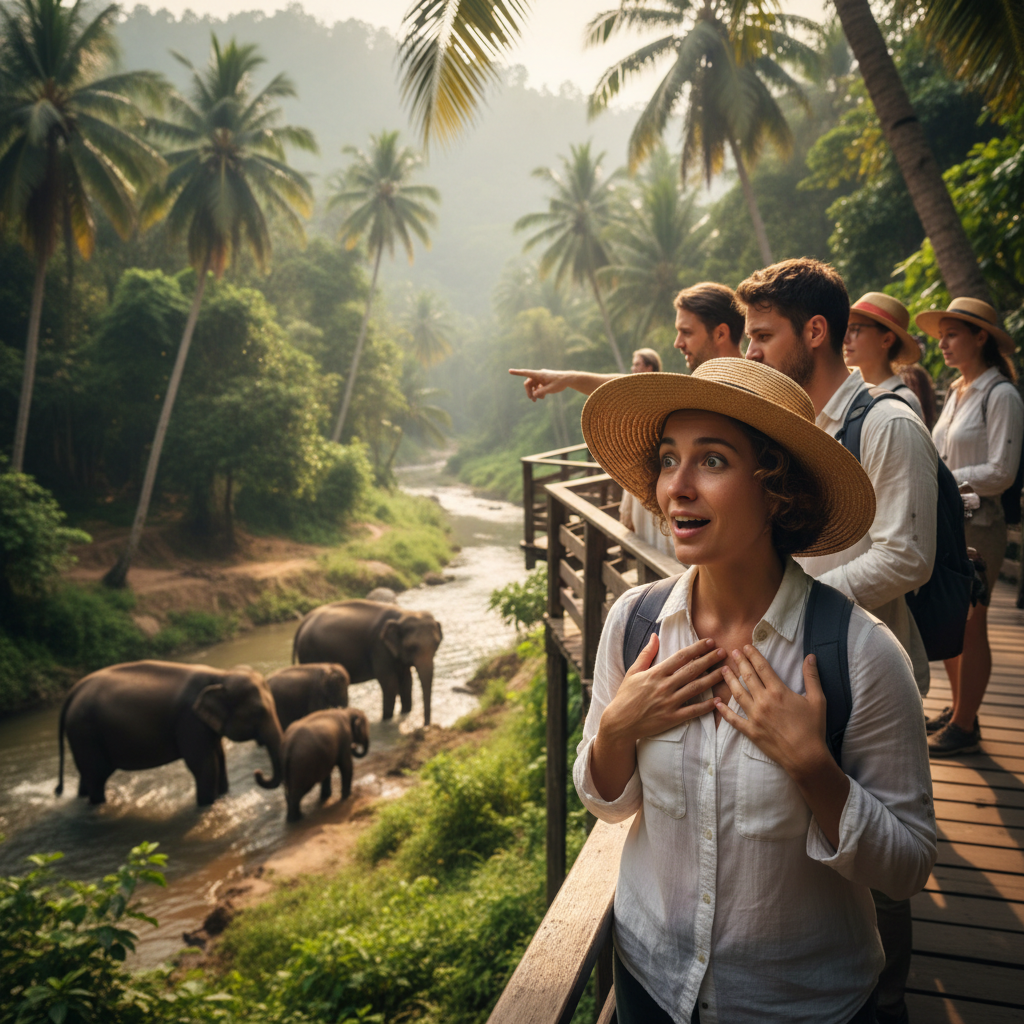
The illusion of joy: why riding elephants has become a problem
Do you want unforgettable emotions from communicating with giants? Dreaming of taking the perfect family photo while riding an elephant? But what if this picture of joy for you turns into years of coercion and pain for the animal? How to find a place where your admiration will not sponsor cruelty?
Classical excursion to elephants in Phuket For a long time it seemed idyllic: smiling tourists on richly decorated backs, animals obediently following commands. However, behind this illusion lies a cruel reality. The main ethical issue is the fundamental gap between the natural behavior of a wild animal and the demands of the entertainment industry. The elephant is a social, intelligent, sensitive creature that needs movement, communication with the herd and freedom of choice. Rides, tricks and constant physical contact with people are deeply stressful for him.
The "training" process for such shows often involves a technique known as "spirit breaking" (phajaan), where a young elephant calf is forcibly torn from its mother and subjected to physical and psychological pressure to break its will. Even if there is no overt cruelty, living in chains, performing monotonous activities on a schedule and not being able to lead a natural lifestyle is exploitation. A tourist who buys such an attraction often does not see this reverse side, but finances it, creating demand.
The roots of tradition: from lumberjacks to photo attractions
To understand how this situation came about, we need to look at history. Elephants in Thailand have been used for centuries as labor force in logging. They were “living machines” and their life was hard, but integration into the economy made a certain sense. In 1989, the country introduced a ban on commercial logging. Thousands of elephants and their mahouts (mahouts) found themselves without work and livelihoods.
Tourism became a logical but ambivalent solution. On the one hand, he saved animals from starvation and provided income to their owners. On the other hand, he transferred the “elephant as a tool” model from forestry to the entertainment industry. Demand from tourists hungry for exotic experiences has shaped the market. This is how former lumberjacks turned into a photo attraction. Economic necessity for many families and the lack of alternatives have long justified this model in the eyes of society, slowing awareness of its ethical failure.
Three interaction models: from riding to observing
Today there are three main models of elephant establishments in Phuket. Understanding them is the key to making informed choices.
1. Traditional tourist camps. They offer elephant riding, trick shows (painting, playing football), and close contact for photos. Animals are often chained and work according to a strict schedule. This is a model directly inherited from the past, where the welfare of the elephant is secondary to the entertainment of the tourist.
2. “Soft” or “green” camps (Green Camps). Many such camps have abandoned saddles (howdahs) in favor of simple mattresses and claim that there is no cruel training. However, they often still offer rides and close contact. This is a transitional but often marketing model. No visible hooks doesn't mean no stress from constantly walking with people on your back.
3. Ethical Elephant Sanctuaries. Their philosophy is radically different. Here the focus is shifted to the welfare of rescued animals. Skating is strictly prohibited. Interaction comes down to observing elephants in their natural habitat, sometimes feeding (special food) and swimming with them in the mud or pond, but only if the initiative comes from the elephant itself, and the process is controlled by the keepers. The income goes towards maintaining, treating and rescuing new animals.
Criteria for an ethical sanctuary: a checklist for a thoughtful tourist
How to distinguish the real one ethical elephant sanctuary from an establishment that only uses buzzwords? Focus on specific signs.
- There is no elephant riding at all. No saddles, mattresses or platforms for sitting on the back. This is an indisputable criterion.
- Freedom of choice for the animal. Elephants are not chained, they can move freely over a large area, communicate with relatives and leave people if they are tired.
- Natural behavior. You won't see any shows, stunts or costumes. Elephants behave like elephants: they eat, bathe, communicate, and roll in the mud.
- Open history of animals. Sanctuary is proud of where and under what circumstances it saved its charges (from tourist camps, from the streets, from logging).
- Limited and controlled interaction. Visits often occur in small groups, at specific times (for example, in the morning, when elephants are active), and contact (feeding, bathing) occurs on their territory and according to their rules.
- Transparency of financing. It is clearly explained where the money from the tickets goes: for food, veterinarians, expansion of the territory, saving new elephants.
The main question to ask yourself and the establishment is: whose interests are the priority here - your desire to have fun or the well-being of the elephant?
Recommended approach: meeting as a dialogue, not an attraction
A visit to a real sanctuary is not an attraction, but a unique experience of observing and, with the permission of animals, delicately participating in their lives. Your role changes from “entertainment consumer” to “guest and supporter.” Instead of controlling an elephant, you learn to understand it.
What does this mean in practice? You can help prepare and serve vitamin balls from fruits to the animals. You can watch the herd go to water or take mud baths, which protect their skin from the sun and parasites. If the elephant enters the pond on its own and shows interest, you may be allowed to gently water it with water from the side without sitting on its back. The impressions from such calm, respectful communication are often much deeper and more emotional than from a standard trip. You leave not just with a photo, but with a rescue story and the understanding that your money went to a good cause.
Demand prevention: how tourists influence the industry
Each choice of a tourist is a vote for a certain model of the future. By buying a ticket to a camp with skiing, you vote with rubles for continued operation. Choosing ethical elephant sanctuary, you are funding an alternative and showing the market that the demand for the humane treatment of animals exists and is economically viable.
This signal works. It was under pressure from conscious tourists and animal welfare organizations that many traditional camps in Phuket and Thailand in general began to change, moving away from ride-on camping and towards an observation model. Your informed choice is the real lever that forces the industry to transform. Ask yourself: do you want to be part of the problem or part of the solution?
An alternative view: is an excursion to elephants even necessary?
There is a radical but logical point of view: the most ethical approach is to completely refuse to visit any establishments that keep wild animals in captivity, even the most progressive ones. Its supporters rightly argue that any commercial establishment, even with the best intentions, creates a demand for keeping elephants in an unnatural environment. The ideal would be for the animal to live in the wild, but for many rescued elephants, who are physically and psychologically traumatized, this is no longer possible.
What should a thoughtful tourist do? Weigh all the arguments. If you decide to visit a sanctuary, do so as consciously as possible, choosing a place that ticks all the boxes on your checklist. Your goal is not to “take advantage” of the elephant, but to support those who give it a second chance at life. If the internal conflict remains too strong, perhaps the right decision for you would be to abandon the visit and support environmental organizations financially or through volunteer work. In any case, this difficult choice, made after analyzing the information, will be the very responsible step that distinguishes a conscious traveler.
Phuket offers encounters with amazing creatures. Not only our experience, but also the future of the elephants themselves depends on how we structure this meeting.