




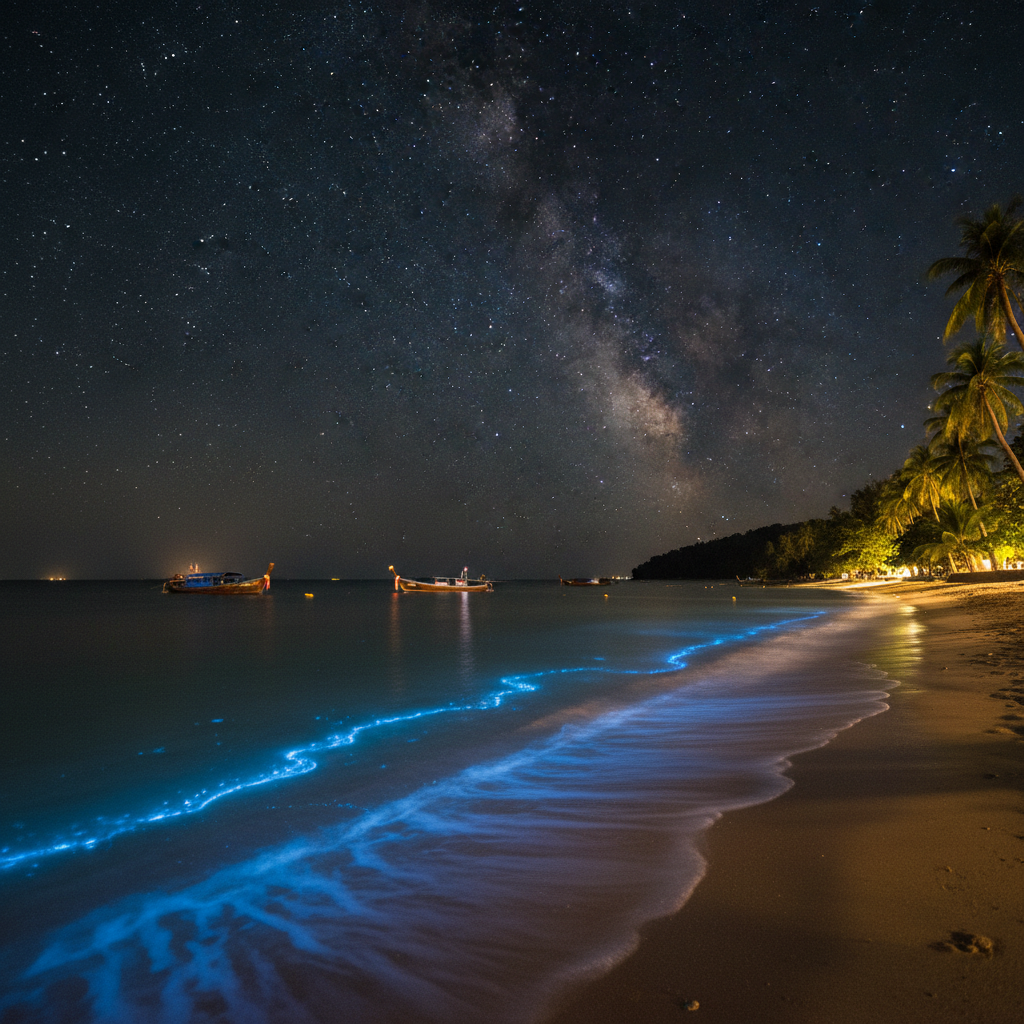
According to unofficial estimates from guides, up to 30% of tourists who go on an excursion to the luminous plankton in Phuket leave disappointed. Not because the phenomenon is a hoax, but because of inflated expectations, the wrong timing or tour format. They imagine a continuous shining sea, like in photos filled with filters, but they see only rare sparkles at the oar. This article is not an advertisement, but an honest analysis of how to avoid this fate and turn your trip into one of the most magical memories of Thailand.
Goal: To see real magic and not be disappointed
Your goal is not just to “go on an excursion”, but to witness a rare natural miracle - bioluminescence. This is a chemical reaction in the cells of microscopic organisms that flash blue-green light when mechanically applied. The real result with the right approach: you are in complete darkness, alone with the sea, seeing how your every movement in the water lights up hundreds of tiny “stars”. This is magic that makes you freeze with delight. But it requires the right conditions and preparation.
Preparation: What you need to know and do before booking
The success of the event depends 80% on the actions taken before purchasing the tour. You need to synchronize three key factors: the calendar, the lunar calendar and weather conditions. And then choose the appropriate type of excursion based on these parameters and your character. Haste and choosing the first option that comes along are the main enemies of impressions.
When is plankton active?
The glow appears most brightly in warm, calm water. The ideal season in Phuket is from November to April, the dry season. During the rainy season (May-October), storms and strong currents disperse plankton, and murky water reduces visibility. There are chances, but they are lower.
Step 1: Choose the right time and place
Has the season been selected? Now let's check the moon. This is critical. Bioluminescence is weak light and is easily drowned out by moonlight. You want the nights around the new moon when the sky is darkest. During the full moon, excursions are often not held at all - there is no point.
The main observation sites are quiet, sheltered bays on the east coast of Phuket and neighboring islands, such as Ao Phang Nga Bay or the bays of Lon Island. It is there that ideal conditions are created for the accumulation of plankton.
Step 2: Select the type of excursion for yourself
The format of the trip determines the entire experience. Here are the key options:
| Excursion type | Pros | Cons | For whom |
|---|---|---|---|
| Group on a speed boat | Often cheaper, includes transfer, sometimes combined with a day program. | There are a lot of people, the noise of the engine scares the plankton, there is little time on site, it feels like a conveyor belt. | For budget travelers who want a "tick" experience. |
| On a kayak (kayaking) | Quiet, you can swim into narrow lagoons, physical contact with water, environmentally friendly. | Requires minimal physical training and depends on the strength of the current and wind. | For active people who value solitude and nature. |
| Private boat tour | Flexible schedule, individual approach, you can agree on the best place, comfort. | Significantly more expensive. | For couples, families with children or those who want ideal photo conditions. |
Choosing excursion to plankton, honestly assess what is more important to you: savings or impressions.
Step 3: Book a tour without hidden surprises
When studying the description, ask yourself (or better yet, the operator) specific questions:
- What kind of boat and how many people are in the group? A small boat or kayak is always preferable.
- Exact departure location and program. How much time is spent on the road, and how much time is spent directly observing the plankton?
- What's included in the price? Transfer, insurance, water, equipment (life jackets, waterproof bags).
- What's Plan B if the weather is bad? Will the trip be postponed or will the money be refunded?
Look for reviews not on the seller’s website, but on independent platforms like TripAdvisor, look at the latest comments.
Step 4: Getting ready to leave - our checklist
Pack things that will save the evening:
- Change of clothes from socks to panties. You are guaranteed to get wet even while sitting on a boat.
- Quick drying towel. Small and light.
- Waterproof neck case for phone or camera. Without this, it is useless to remove - the equipment will get wet or fall into the water.
- Repellent (after application, wash off palms!). There are mosquitoes in the mangrove bays.
- Dark, non-stainable clothes. A light one will reflect moonlight and interfere with the eyes' adaptation to the dark.
What to leave at the hotel: valuable jewelry, wallet, anything that is afraid of water. Take minimal cash.
Step 5: On the spot - how to behave for the best effect
You have arrived. To enhance the effect, follow simple rules:
- Give your eyes time to adjust. Turn away from any light sources (flashlights, phone screens) for 10-15 minutes. You'll be surprised how your night vision improves.
- “Wake up” plankton correctly. Smoothly move your hand or paddle through the water. Sharp bursts create a lot of light, but it quickly goes out. Slow, sweeping movements are better.
- Keep quiet and do not shine flashlights into the water. This is not only for the atmosphere, but also for the environment. Do not use sunscreen before swimming - it harms plankton.
- Enjoy the moment, not just the view through the screen. First, immerse yourself in the experience, then try to capture it.
The main secret is not to wait for the dazzling neon glow, but to tune in to meditative observation of the living sparks in the black water. This makes the moment truly magical.
Result: Unforgettable impressions and perfect shots
By following these steps, you will get exactly the experience you were looking for. You will find yourself in complete darkness, where the only light is the stars above your head and flashes of living light under your hands. It feels like you are in control of a small galaxy. The emotions after such a return are delight and slight disbelief in the reality of what he saw.
As for the photo: a standard phone will not cope in the dark. You need a camera with manual settings (Manual mode). Set a high ISO (1600-3200), a wide aperture (f/2.8 or lower) and a slow shutter speed (1-2 seconds). You can try the phone in Pro mode with similar settings or use long exposure apps. But remember: the best shots will remain in your memory, not on your memory card.
Selection and preparation for tour to bioluminescent plankton — a small investment of time that pays for itself many times over through the quality of the experience. You now know how to avoid the traps and turn this night into a story you will tell for years.